Loading...
← Back to Mega Fauna Index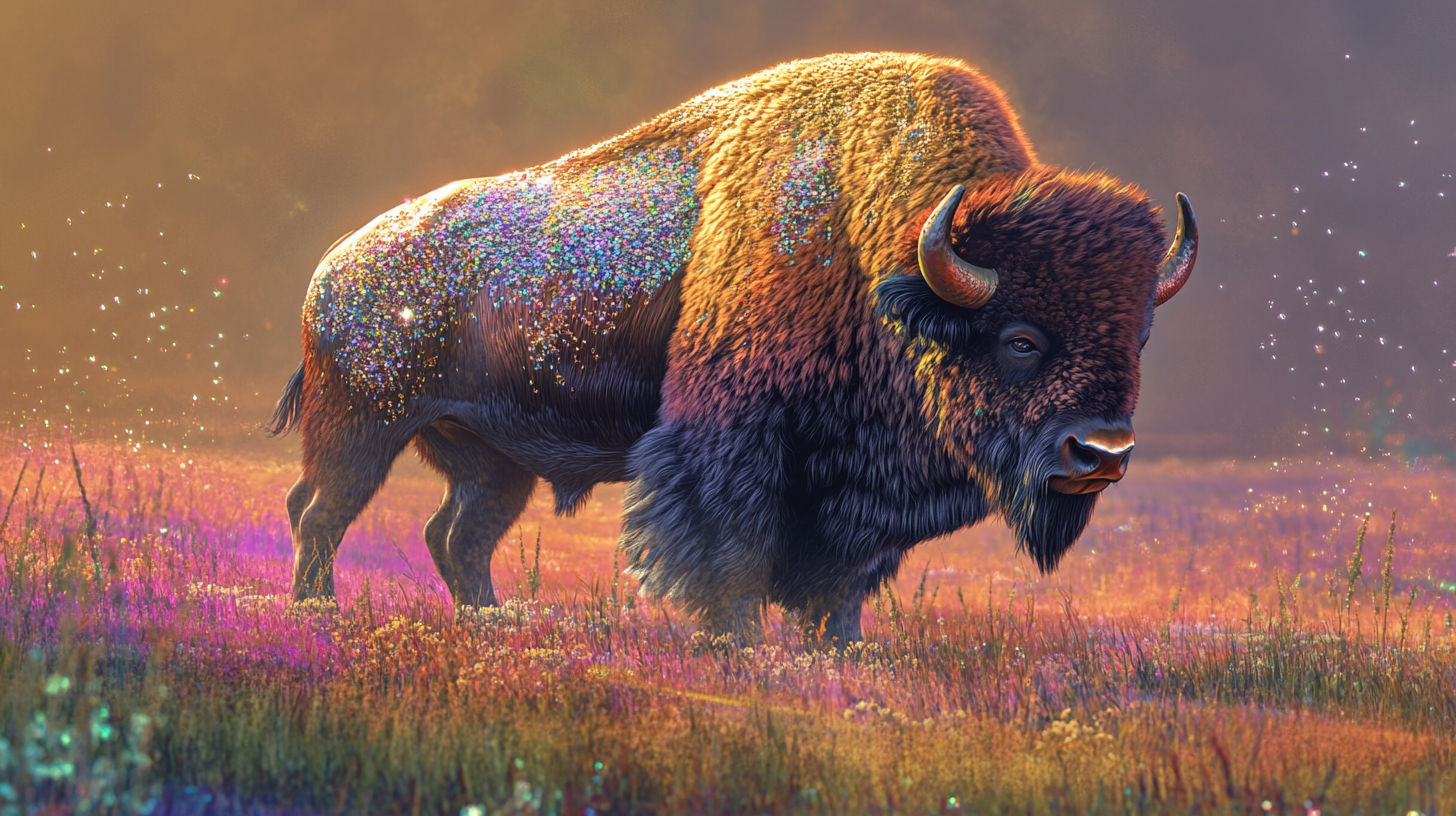
Prismatic Plains Bison
Bison metallum
Mineral Processor - Prismatic PlainsA Prismatic Plains Bison displaying its metallic-hued hide - "The Living Forges of the Mineral Grasslands" - each color a testament to the minerals it has processed.
Across the shimmering, metallic-hued grasslands of Aethoria, the Prismatic Plains Bison moves like a living forge, transforming the very landscape with each thundering step and each mouthful of mineral-rich grass. These remarkable creatures possess an extraordinary digestive system capable of processing trace metals from prairie grasses with unprecedented efficiency, creating a complex ecosystem of mineral transformation that sustains entire tribal economies.
Physical Characteristics
A full-grown bull reaches nearly 7 feet at the shoulder, weighing 2,500-3,000 pounds, with females only slightly smaller. Their muscular frames are adapted to the demanding environment of the prismatic plains, while their most remarkable feature - their metallic-hued hide - displays stunning arrays of deep reds, vibrant greens, rich blues, and occasional purple tones. Each color reflects the specific mineral compositions the bison has ingested and processed.
Younger bison and calves typically display more muted brown tones, their metallic processing capabilities still developing. As they mature and graze on increasingly mineral-rich grasses, their hides transform into the brilliant displays that give these creatures their name.
The Living Forge
The true magic of these bison lies in their extraordinary digestive system and its waste products. As they graze, they consume plants laden with minute metallic compounds, concentrating and transforming these elements through their complex digestive process. What might seem like ordinary dung is actually a valuable resource containing 40% magical metals.
Plainsmen tribes collect these metallic-rich droppings and burn them in carefully managed campfires. Over time, these fires produce unique ingots of varying metals - copper, silver, and platinum-like compounds that become crucial trade goods prized for their magical properties and exceptional quality. Merchants and caravans travel great distances to acquire these metals.
Herd Dynamics
Matriarchal in structure, herds are led by the oldest and most experienced females - those whose bodies have perfected the art of mineral processing. These elder females guide the herd to the most nutrient-rich grazing grounds, reading the landscape like a living map. Their knowledge is critical, as the wrong patch of grassland could mean mineral imbalance or even toxic overload.
During early morning hours, herds move in massive, undulating waves across the grasslands, hooves kicking up clouds of mineral-rich dust. Young calves stay close to their mothers, their developing bodies already beginning the intricate process of metal absorption. Herds typically number 50-200 individuals, providing collective protection against the numerous predators that target these valuable creatures.
Predation and Survival
Multiple predator species target Prismatic Plains Bison: lions, dire wolves, bears, Red Bears, Basilisks, and occasionally dragons. Despite these threats, the bison have developed remarkable survival strategies. Large herd sizes, rapid reproductive rates, and robust physical characteristics ensure their survival. Adult bison form protective circles around vulnerable young, their metallic hides and massive horns creating formidable barriers.
Cultural Significance
For the Plainsmen tribes, the Prismatic Plains Bison are sacred beings central to survival and prosperity. Every aspect is honored and utilized - meat provides mineral-rich sustenance, hides become durable clothing and shelter, bones transform into tools and ornaments, and processed waste yields the metal ingots that form the foundation of tribal trade. The relationship is cyclical: tribes protect and manage the herds, ensuring continued prosperity for both people and bison.
Information compiled by the Imperial Academy of Natural Studies, with contributions from the Plainsmen Peoples' Oral Traditions and the Metallurgical Studies Division.