Loading...
← Back to Mega Fauna Index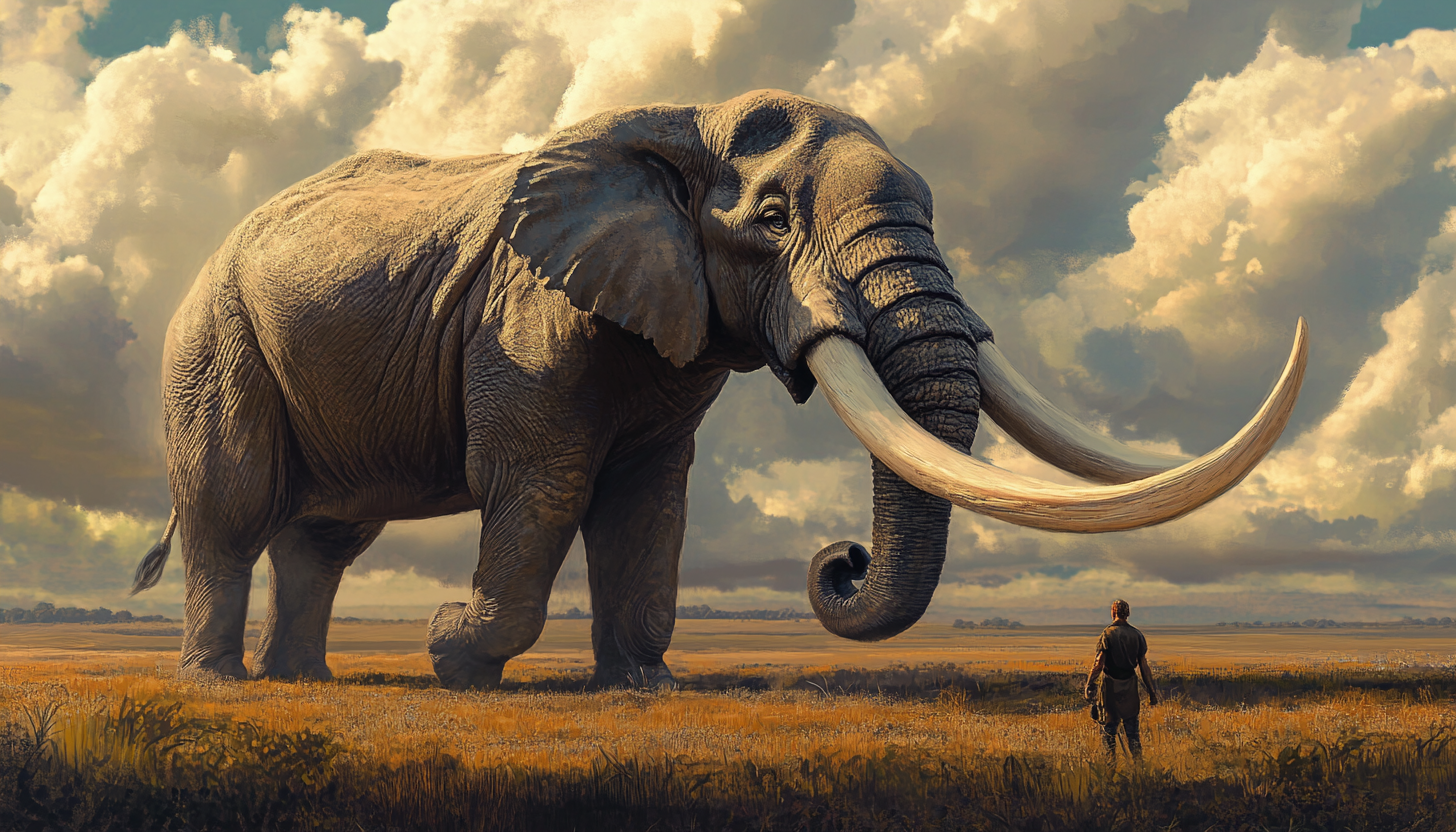
Oliphants
Elephas maximus aethorius
Gentle Giant - Jungles and SavannahsA herd of Oliphants moves through the savannah, their enormous tusks bearing the intricate patterns that tell the story of each individual's life.
Among the most magnificent creatures to walk the lands of Aethoria are the Oliphants, gentle giants whose wisdom and grace belie their enormous size. These remarkable beings share our world with a quiet dignity, their presence both humbling and awe-inspiring. Standing three to four times larger than their elephant cousins, they represent the pinnacle of pachyderm evolution in Aethoria.
Physical Characteristics
Oliphants can reach heights of 18-24 feet at the shoulder, with massive frames weighing between 15-20 tons. Despite their intimidating size, they are peaceful herbivores, known for their gentle nature and deep familial bonds. They move with surprising grace through both jungle and savannah, their presence commanding respect from all who witness them.
Their most distinctive features are their enormous tusks, which can grow up to 12 feet in length. These tusks bear intricate patterns - natural markings that appear to tell the story of each Oliphant's life. While humans cannot read these marks, Oliphants seem to understand them, often spending hours examining the tusks of their deceased kin.
Society and Family
Oliphant society revolves around the matriarch, usually the oldest and wisest female of the herd. These matriarchs carry generations of knowledge about migration routes, feeding grounds, and the histories of their people. The herd moves as one extended family, with aunts, sisters, and grandmothers all helping to raise the young.
Young Oliphants hold a special place in the herd. During feeding times, adults will step aside to allow the youngsters first access to the choicest foods. This practice extends even to young elephants when the two species share feeding grounds, demonstrating the remarkable cooperation between these cousin species.
The Mystery of the Bones
Perhaps the most fascinating aspect of Oliphant culture is their treatment of death. When an Oliphant dies, a complex ritual unfolds. The nearest wild herd's matriarch is always offered the bones of the deceased. If accepted, the herd will carefully collect every bone and transport them to sacred burial grounds - locations known only to the Oliphants themselves.
Close study of Oliphant tusks and bones has revealed intricate patterns that seem to form a kind of natural writing. These markings appear to record the individual's life story, achievements, and lineage. While humans cannot decipher this bone-script, Oliphants spend long hours examining these remains, suggesting they can read and understand these markers of their ancestors' lives.
A Tale of Two Paths
Some Oliphants have formed deep bonds with human societies, particularly the peoples of the savannah who revere them as totem animals. These semi-domesticated Oliphants serve as mighty laborers, helping with tasks that would be impossible for humans alone - construction, clearing land, and even warfare when necessary.
However, this choice comes at a price. Wild Oliphants rarely accept the bones of their domesticated kin into their burial grounds, suggesting a deep cultural divide. The markings on domesticated Oliphants' tusks also show distinct differences, perhaps telling different kinds of stories.
Guild Advisory
The Adventurer's Guild classifies Oliphants as a protected species of exceptional cultural significance. While not aggressive, their sheer size makes caution advisable. Observers should maintain respectful distance and never approach burial grounds or bone collection rituals. The Guild strictly prohibits any interference with Oliphant remains or sacred sites.
Information compiled by the Imperial Academy of Natural Studies, with contributions from the Savannah Peoples' Oral Traditions Archive.